


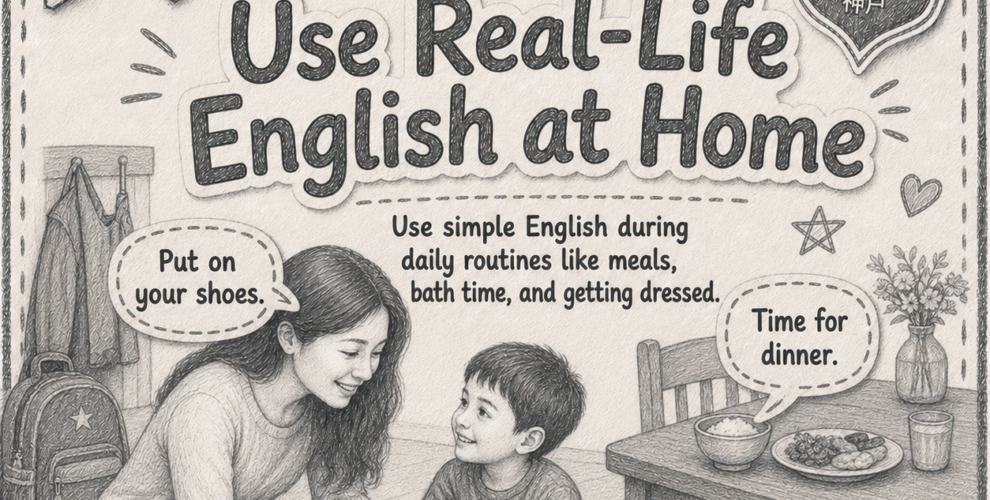
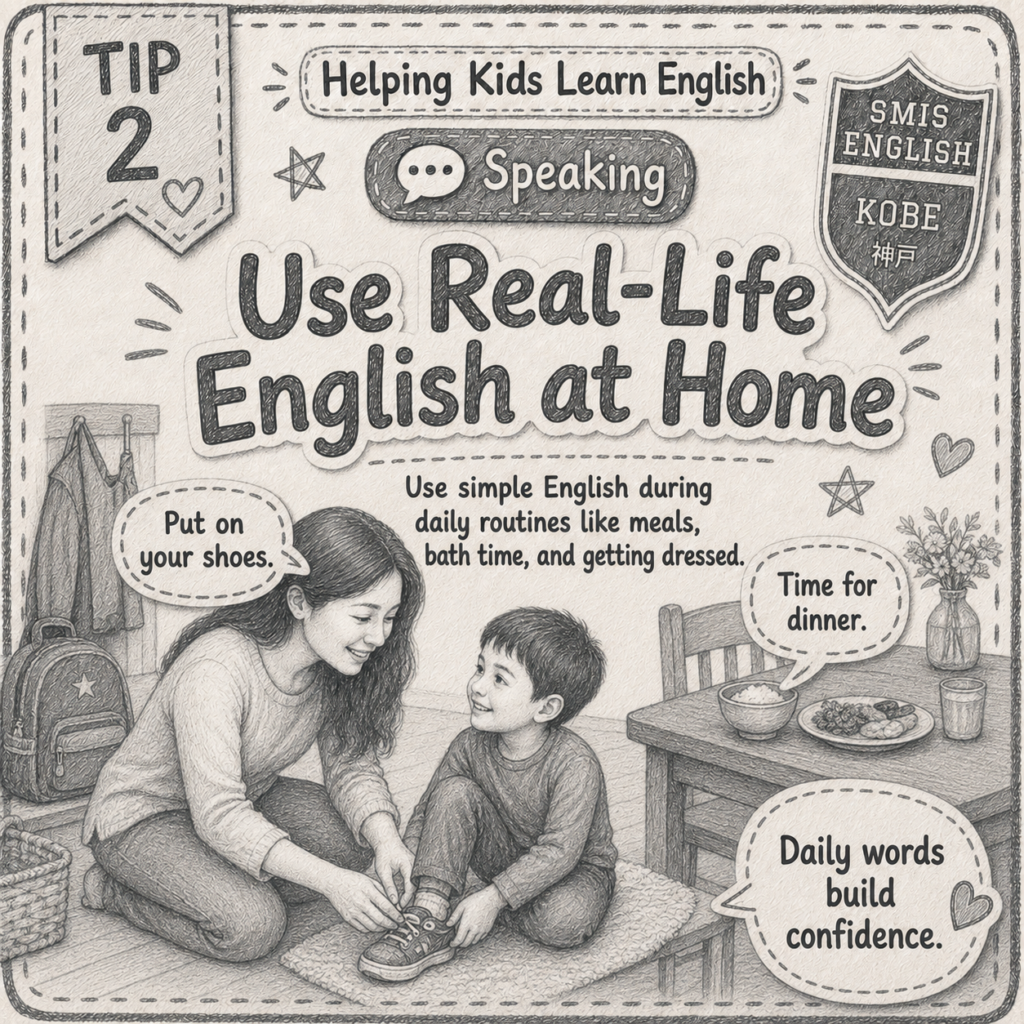
Learning English does not have to happen only during lessons or while doing homework. In fact, some of the best learning happens during everyday family routines. Simple conversations help children see English as a useful way to communicate, not just another school subject.
At SMIS-English, we encourage families to use small amounts of English throughout the day. You do not need to speak perfect English or hold long conversations. Instead, using familiar words and short phrases regularly can make a big difference over time.
Children learn best when language has a purpose. Therefore, connecting English to daily activities helps them understand meaning naturally and builds confidence through repetition.
How to Apply This Tip in Daily Life
First, choose one or two daily routines where English feels natural. For example, you could use English during breakfast, getting ready for school, shopping, or bedtime.
Start with short phrases such as:
- “Good morning!”
- “Time for breakfast.”
- “Where are your shoes?”
- “Can you help me?”
- “Let’s clean up.”
- “Good night.”
Next, repeat these phrases every day. Children learn through hearing the same language many times in meaningful situations.
Also, ask simple questions that encourage conversation:
- “What would you like to eat?”
- “What colour is your shirt?”
- “What was your favourite part of today?”
- “Can you find something blue?”
If your child answers with one word, that’s perfectly fine. Simply build on their response.
For example:
Child: “Apple.”
Parent: “Yes! It’s a red apple.”
Remember, the goal is communication, not perfection.
Benefits of This Practice
Using English during everyday routines helps children hear useful vocabulary in real situations. As a result, words become easier to remember because they are connected to actions and experiences.
Regular family conversations also increase children’s exposure to spoken English. Even short interactions can build listening skills, vocabulary, and speaking confidence over time.
Research has shown that both the quantity and quality of conversations between parents and children play an important role in vocabulary development. Children benefit from hearing a wide variety of words, explanations, and meaningful conversations throughout the day. Although this research focused on children learning their first language, the same principle supports creating rich language experiences while learning English.
Research source: Meredith L. Rowe (2012), A Longitudinal Investigation of the Role of Quantity and Quality of Child-Directed Speech in Vocabulary Development.
Try This Today
Choose just three English phrases your family will use every day this week.
Consistency is more important than speaking perfectly. Little by little, these simple conversations help children build confidence and discover that English is part of everyday life, not just something they learn in the classroom.
Don’t worry if your child replies in your home language. Continue the conversation naturally and model the English words. Over time, children will begin using more English as their confidence grows.