

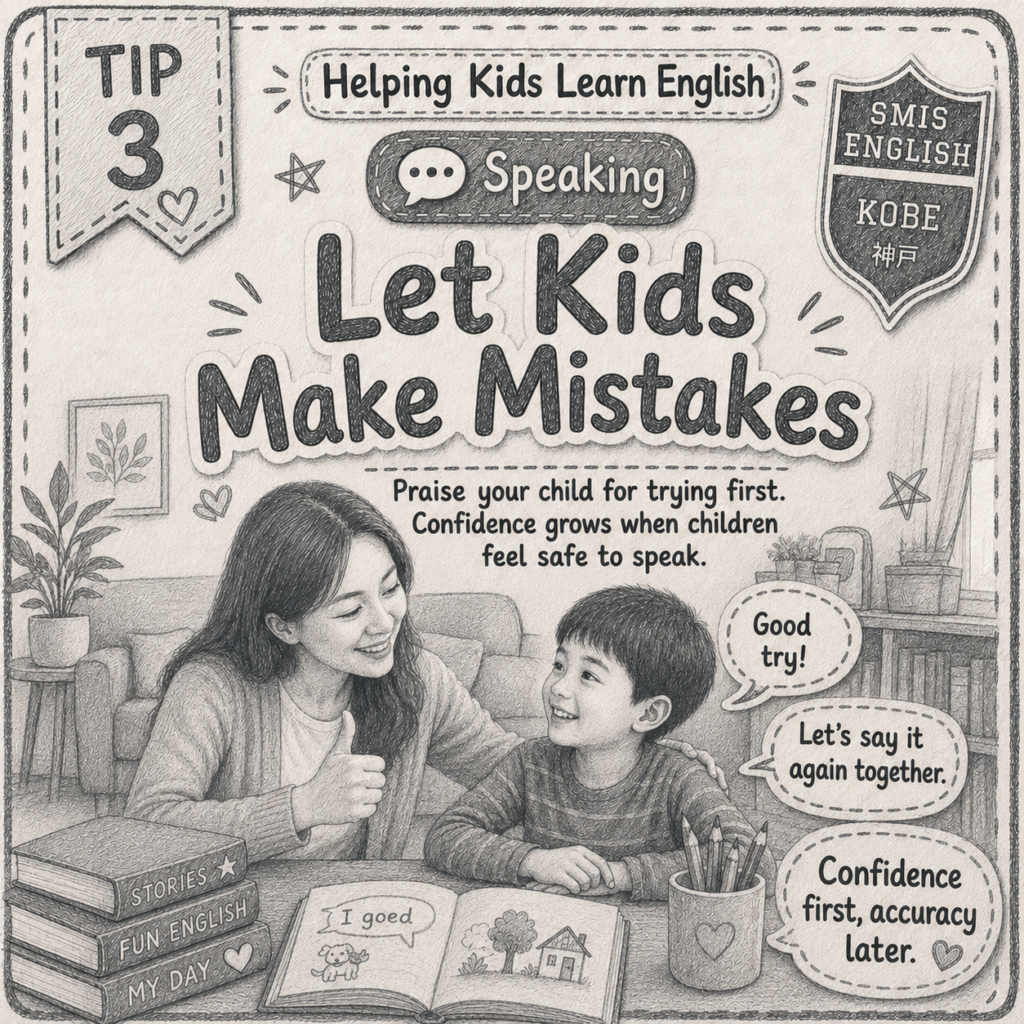
Mistakes are a normal part of learning English. Children need to know that it is safe to try. Otherwise, they may speak less because they fear being wrong. Therefore, communication should come before perfect grammar during everyday conversations.
How to Apply This Tip in Daily Life
First, listen to your child’s complete message.
Then, respond to the meaning before correcting the English. For example, your child may say,
“I goed to the park.” You can reply, “You went to the park? That sounds fun.”
This gives the correct model without stopping the conversation.
Benefits of This Practice
Research has found that trying an answer can support later learning. This can happen even when the first answer is incorrect. However, the correct answer must be given afterwards. The study was not about young English learners, but it supports learning through attempts and feedback.
Read the original research on learning from unsuccessful attempts
Try This Today
The next time your child makes a mistake, respond to their idea before correcting their English.