

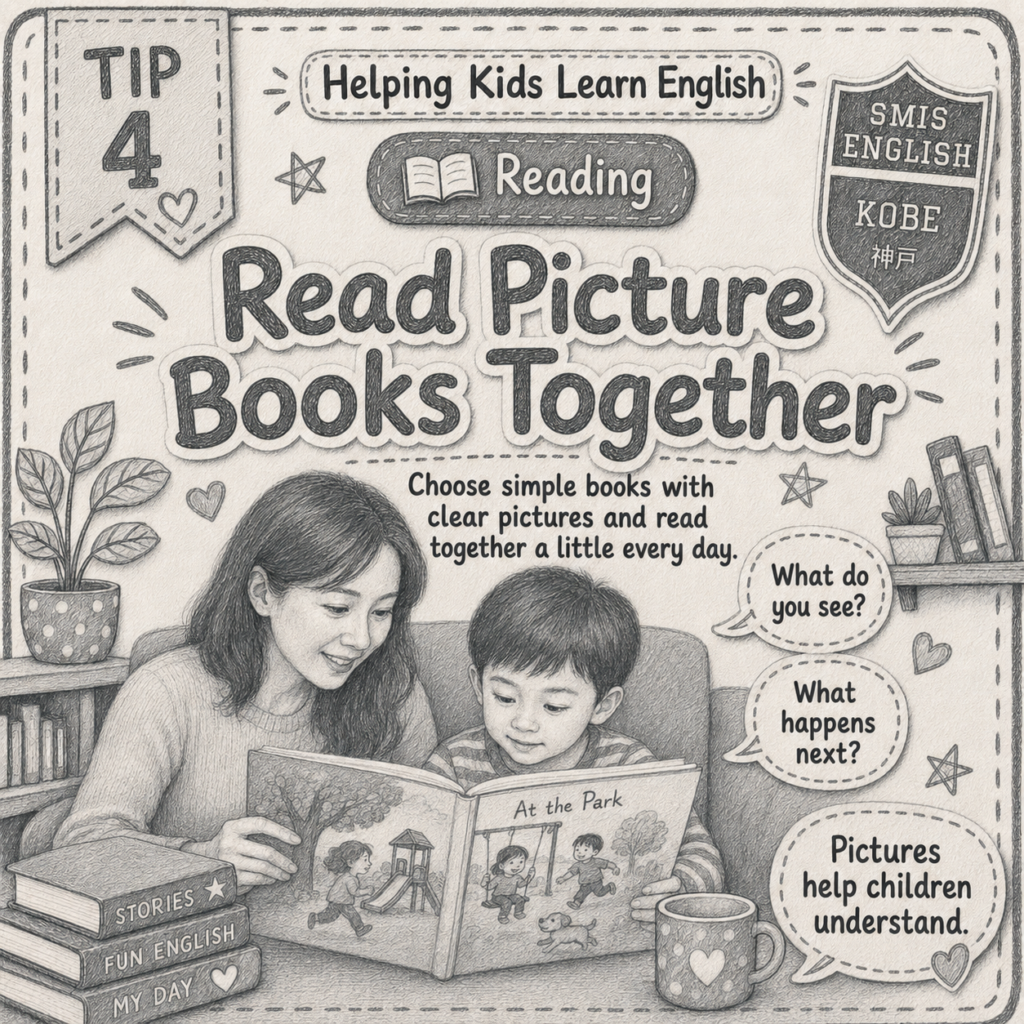
Picture books combine spoken English, written words, and visual clues. Therefore, children can follow a story without understanding every word. Pictures also help them predict events and notice important details. Above all, shared reading should feel enjoyable rather than stressful.
How to Apply This Tip in Daily Life
Begin by looking at the book cover together. Ask what the story might be about. Next, point to important people, animals, or objects while reading. Pause sometimes so your child can comment or copy a repeated phrase. Beginners can simply point to the correct picture.
Benefits of This Practice
Interactive picture-book reading can support expressive language development and encourage children to give longer verbal responses.
Research: Picture-Book Reading Study – ERIC
Try This Today
Beginners can simply point to the correct picture or answer simple questions like:
What do you see on this page?
How does this character feel? (e.g., happy, sad, scared)
What colors or shapes can you find in this picture?
Where are they going?
Intermediate students can explore more difficult concepts such as describing action verbs, expressing simple opinions, and guessing what happens next.
- What is happening in this picture?
- Why is the character doing that?
- What do you think will happen next?
- What would you do if you were this character?
- What do you like about this page?
More Advanced students can challenge questions and explain explain their reasoning or connect the book’s events to their own life experiences.
- Why did the story end this way?
- How is this character like you? How are they different?
- What is the problem in this story? How do they fix it?
- What does this story remind you of in your own life?
It is important to remember to:
Use Wait Time: Give students at least 5–10 seconds to think and translate their thoughts before prompting them again.
Accept Non-Verbal Answers: If a student cannot find the English word, encourage them to point to the picture or act out the motion.
Model the Answer: Start the sentence for them (e.g., “I think the dog feels…”) to give them a confident starting point.